
Your basket is empty

Golf Simulator Technology 2026: AI Features & Market Trends
The golf simulation industry is experiencing unprecedented growth and innovation, with 2026 marking a pivotal year for technological advancement. Following the recent PGA Merchandise Show in Orlando, industry experts are buzzing about artificial intelligence integration, more affordable hardware, and enhanced software capabilities that are reshaping how golfers practice and play at home.
For UK golf enthusiasts considering investing in home simulator technology, understanding these emerging trends is crucial. The market is evolving rapidly, with traditional barriers to entry dissolving as prices drop and features multiply. From AI-powered coaching systems to ultra-realistic virtual reality experiences, the landscape of golf simulator technology is transforming in ways that benefit both serious golfers and weekend warriors alike.
In this comprehensive analysis, we’ll explore the key technological developments, market dynamics, and emerging opportunities that are defining the golf simulator industry. Whether you’re planning your first home setup or considering an upgrade, these insights will help you navigate the exciting world of modern golf simulation technology.
The Rise of AI-Powered Golf Simulation
Artificial intelligence is revolutionising golf simulator technology, introducing capabilities that were unimaginable just a few years ago. The integration of AI into golf simulators represents perhaps the most significant advancement in the industry’s recent history.
Machine Learning Swing Analysis
Modern AI systems can analyse thousands of data points from each swing, identifying patterns and inconsistencies that even experienced instructors might miss. These systems learn from professional golfer databases, comparing your swing mechanics to optimal patterns and providing real-time feedback.
The technology extends beyond simple ball flight tracking. Advanced AI algorithms can detect subtle changes in posture, grip pressure, and swing tempo, offering personalised recommendations for improvement. Some systems even predict shot outcomes before the ball is struck, based on swing plane analysis and club face positioning.
Intelligent Course Management
AI-powered simulators now offer sophisticated course management advice, analysing your historical performance data to suggest optimal strategies for different holes and conditions. The system considers factors like wind speed, pin position, and your individual strengths and weaknesses to recommend shot selection and club choice.
Adaptive Training Programmes
Perhaps most impressively, AI systems can design customised training programmes that evolve based on your progress. These programmes identify specific areas for improvement and create targeted exercises to address weaknesses whilst building on existing strengths.
Market Growth and Affordability Revolution
The UK golf simulator market has experienced remarkable expansion, with industry analysts projecting continued growth through the remainder of the decade. Market research indicates the UK golf simulators sector was valued at £79.96 million in 2024 and is expected to reach £88.52 million in 2025, with projections suggesting sustained growth.
Price Democratisation
One of the most significant trends emerging from the recent PGA Show is the dramatic reduction in entry-level pricing. High-quality launch monitors that once cost thousands of pounds are now available for hundreds, making professional-grade technology accessible to average golfers.
The Shot Scope LM1 Launch Monitor, announced at the show with a £200 price point, exemplifies this trend. Such devices offer radar-based tracking capabilities that were previously reserved for premium systems costing ten times more.
Improved Value Propositions
As Jon Sherman from Practical Golf noted, the market is following a similar trajectory to the television industry, where consumers receive better products at lower prices over time. This trend is accelerating competition amongst manufacturers, driving innovation whilst reducing costs.
Hardware Innovations and Enhanced Performance
The hardware landscape for golf simulators has evolved dramatically, with manufacturers focusing on accuracy, durability, and user experience improvements.
Advanced Sensor Technology
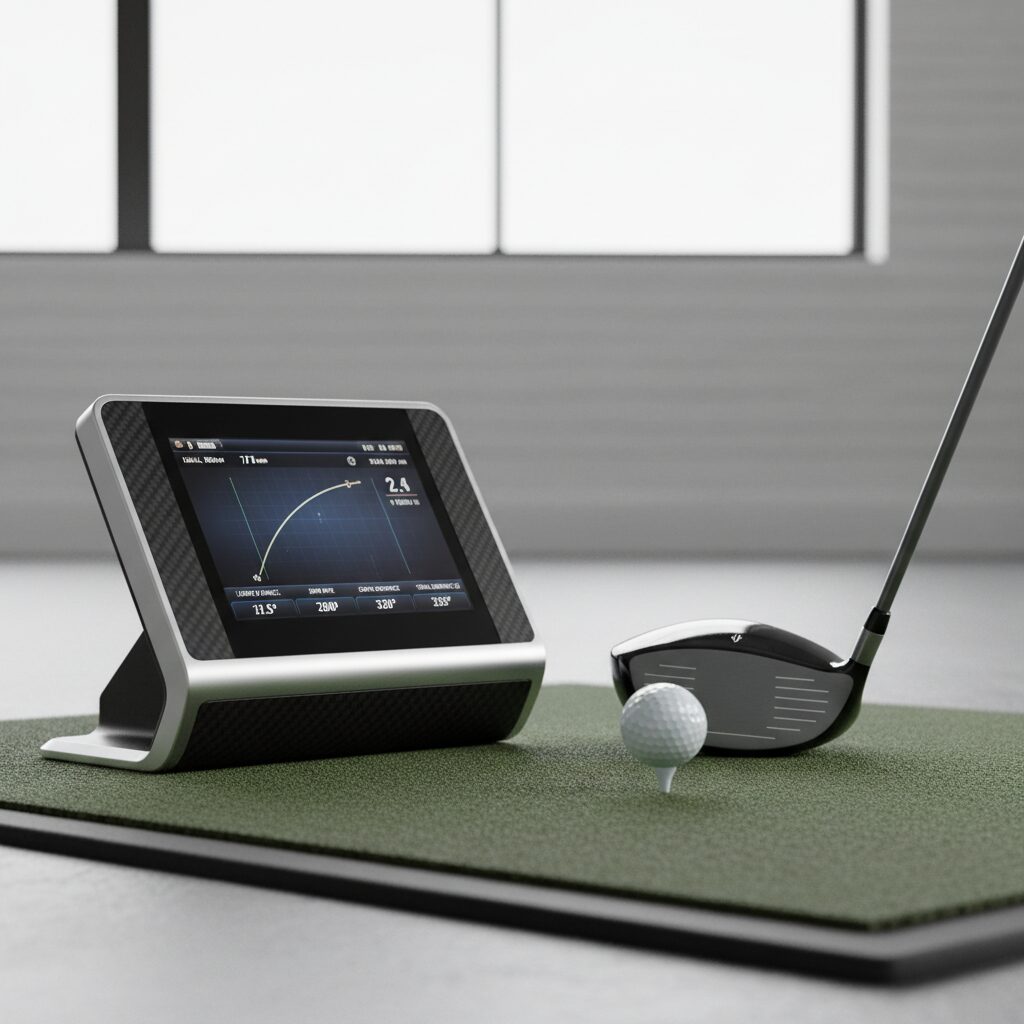
Modern launch monitors utilise sophisticated radar and camera systems that capture ball flight data with unprecedented precision. These sensors can track spin rates, launch angles, and ball speed with professional-grade accuracy, providing data that rivals what’s available at tour-level facilities.
The latest generation of sensors also offers improved club tracking capabilities, monitoring face angle, swing path, and impact location on the club face. This comprehensive data collection enables more detailed analysis and better feedback for golfers seeking improvement.
Enhanced Display Technologies
Impact screens and projection systems have undergone significant improvements, offering higher resolution imagery and more realistic course representations. 4K and even 8K projection capabilities are becoming standard in premium systems, whilst entry-level options now offer quality that surpasses what was considered professional-grade just a few years ago.
The integration of ultra-short throw projectors has also simplified installation requirements, making it easier for homeowners to set up systems in smaller spaces without compromising image quality.
Improved Durability and Reliability
Manufacturers have invested heavily in creating more robust systems that can withstand regular use without degradation in performance. Enhanced impact screens resist wear and tear better, whilst sensors are designed to maintain calibration accuracy over extended periods.
Software Evolution and Course Libraries
The software component of golf simulators has perhaps seen the most dramatic improvements, with developers creating increasingly sophisticated and engaging experiences.
Expanded Course Offerings
Modern simulator software packages include hundreds of accurately mapped courses from around the world, including many famous UK venues. These digital recreations utilise high-resolution imagery and precise topographical data to create authentic playing experiences.
The quality of course mapping has improved significantly, with many systems now offering photo-realistic graphics that capture the subtle details of famous holes. Weather simulation adds another layer of realism, allowing golfers to experience different playing conditions.
Enhanced Physics Engines
Software developers have invested in creating more accurate physics engines that better simulate real-world ball behaviour. These systems account for factors like altitude, humidity, and course conditions, providing more realistic shot outcomes.
The integration of advanced wind simulation creates dynamic playing conditions that change throughout virtual rounds, adding strategic elements that mirror real golf experiences.
Social and Competitive Features
Modern simulator software includes robust multiplayer capabilities, allowing golfers to compete with friends remotely or participate in online tournaments. These social features have become increasingly important, particularly as golfers seek ways to maintain connections with playing partners during off-season periods.
Professional vs Amateur Applications
The golf simulator market serves distinctly different needs for professional and amateur golfers, with technology developments addressing both segments.
Professional Training Tools
For professional golfers and serious amateurs, simulators now offer tour-level data analysis capabilities. These systems provide the detailed feedback necessary for high-level performance optimisation, including advanced metrics like spin axis, angle of attack, and dynamic loft.
Professional systems often integrate with broader training ecosystems, allowing coaches to track long-term progress and compare performance across different sessions and conditions.
Amateur Entertainment and Improvement
Amateur golfers benefit from simplified interfaces that focus on enjoyment whilst still providing valuable feedback for improvement. These systems often emphasise game-like features, achievement systems, and social elements that keep recreational players engaged.
The golf simulator cost for amateur-focused systems has decreased significantly, making quality simulators accessible to a much broader audience.
| Feature | Professional Systems | Amateur Systems |
|---|---|---|
| Data Accuracy | Tour-level precision with extensive metrics | Accurate but simplified data presentation |
| Price Range | £15,000 – £100,000+ | £2,000 – £15,000 |
| Setup Complexity | Professional installation required | DIY-friendly with guided setup |
| Software Focus | Training and analysis tools | Entertainment and casual improvement |
| Space Requirements | Dedicated facilities with optimal dimensions | Adaptable to home spaces |
| Maintenance | Regular professional calibration | Minimal user maintenance required |
Installation and Space Considerations for UK Homes
The practicalities of installing golf simulators in UK homes have become increasingly manageable as manufacturers develop more flexible solutions.
Space Optimisation
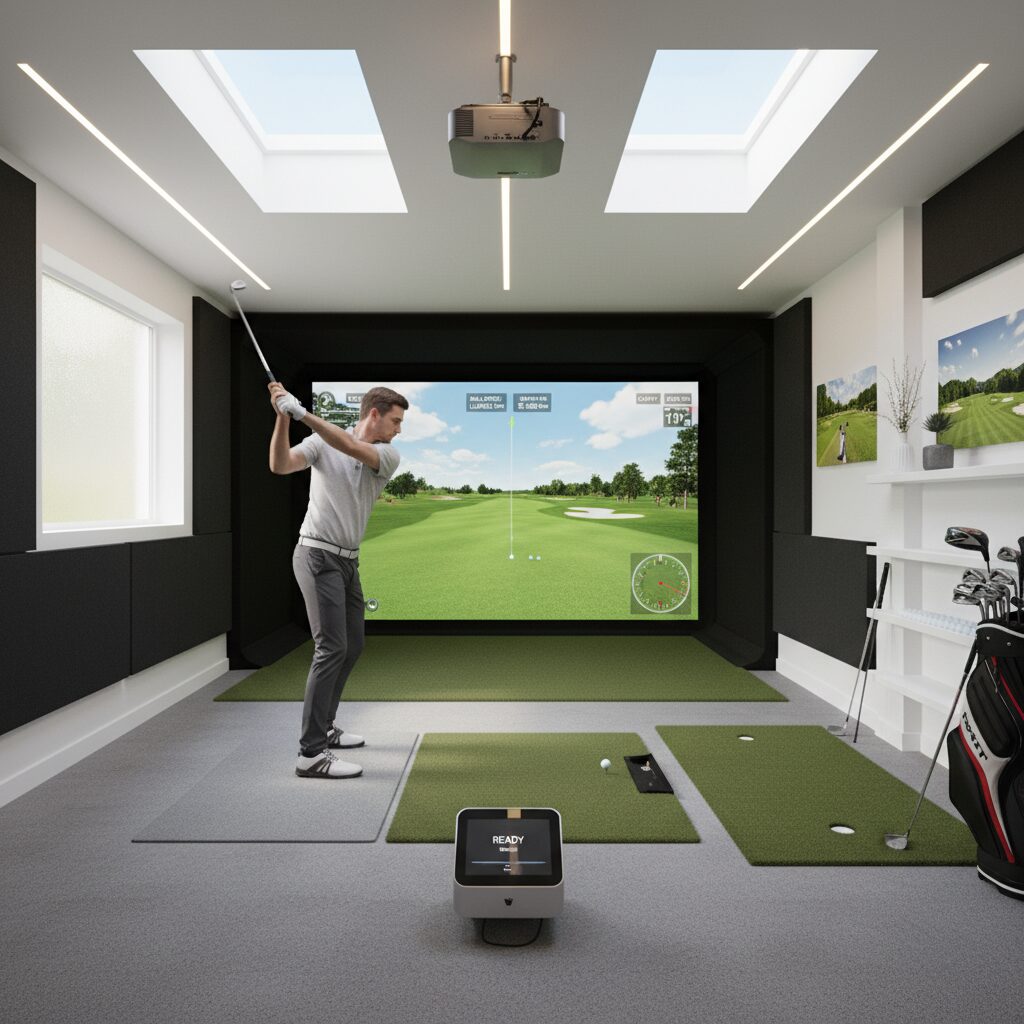
Modern simulator designs accommodate the space constraints common in UK properties. Manufacturers now offer solutions for ceiling heights as low as 8.5 feet and room lengths of 10 feet, making simulators feasible in converted garages, basements, or spare rooms.
Panel golf dens and cabin golf dens provide structured solutions that maximise available space whilst ensuring safety and optimal performance.
Acoustic Considerations
Noise management has become a priority for UK homeowners, particularly in terraced or semi-detached properties. Modern systems incorporate sound dampening technologies and quieter impact materials to minimise disturbance to neighbours.
Proper acoustic treatment not only addresses noise concerns but also enhances the simulation experience by reducing echo and improving audio clarity.
Electrical and Ventilation Requirements
Contemporary simulator systems are designed to work with standard UK electrical supply, though proper ventilation becomes important during extended use. Many systems now include energy-efficient components that reduce heat generation and power consumption.
Future Trends and Emerging Technologies
Looking beyond current capabilities, several emerging technologies promise to further revolutionise golf simulation.
Virtual and Augmented Reality Integration
Virtual reality headsets are beginning to integrate with traditional simulator setups, offering immersive experiences that transport golfers to famous courses with unprecedented realism. Augmented reality applications overlay digital information onto real-world views, providing training aids and performance feedback in innovative ways.
Advanced Biometric Monitoring
Future systems may incorporate comprehensive biometric monitoring, tracking heart rate, muscle tension, and balance throughout the swing. This data could provide insights into the physical aspects of performance that current systems cannot address.
Cloud-Based Analytics
Cloud computing enables more sophisticated data analysis and storage, allowing golfers to access their performance history from anywhere and benefit from insights derived from large datasets of similar players.
Haptic Feedback Technology
Emerging haptic feedback systems could provide physical sensations that simulate different course conditions, such as the feeling of hitting from different lies or the resistance of thick rough.
Frequently Asked Questions
How accurate are modern golf simulators compared to outdoor play?
Modern golf simulators achieve remarkable accuracy, with professional-grade systems typically showing ball speed accuracy within 1% and launch angle precision within 0.5 degrees. However, factors like green reading, uneven lies, and weather conditions cannot be perfectly replicated. For swing analysis and ball striking practice, simulators provide data that often exceeds what’s available on traditional driving ranges.
What space requirements are needed for a home golf simulator in the UK?
Minimum space requirements vary by system, but most modern simulators can operate in rooms as small as 10 feet long, 10 feet wide, and 8.5 feet high. However, for optimal comfort and safety, dimensions of 12x12x9 feet are preferable. UK-specific considerations include ceiling height limitations and noise management for neighbouring properties.
Can golf simulators actually improve your game?
Yes, golf simulators can significantly improve your game through consistent practice opportunities, detailed swing analysis, and immediate feedback. The ability to practise year-round, regardless of weather, allows for more frequent training sessions. However, simulators work best when combined with occasional outdoor play and professional instruction to address elements like course management and varying conditions.
How much should I budget for a quality home golf simulator?
Entry-level systems suitable for casual use start around £2,000, including basic launch monitors and software packages. Mid-range systems offering good accuracy and features typically cost £5,000-£10,000. Premium home installations can exceed £20,000 when including professional setup, high-end projectors, and comprehensive golf bundles. Consider ongoing costs for software subscriptions and potential upgrades.
Do I need professional installation for a golf simulator?
While many modern systems are designed for DIY installation, professional setup ensures optimal performance and safety. Complex installations involving structural modifications, extensive wiring, or premium projection systems benefit from professional expertise. Many suppliers offer design consultation services to help plan installations and identify potential challenges before purchase.
What maintenance is required for golf simulators?
Maintenance requirements are generally minimal for modern systems. Regular tasks include cleaning impact screens, updating software, and occasional sensor calibration. Professional systems may require annual calibration services, whilst consumer-grade systems often maintain accuracy through automatic calibration features. Proper care of strike mats and regular inspection of mounting hardware helps ensure longevity.
The Future of Golf Simulation Technology
The golf simulator industry stands at an exciting crossroads, where advancing technology meets growing consumer demand and improving affordability. The developments showcased at recent industry events demonstrate that we’re entering an era where high-quality golf simulation is becoming accessible to a much broader audience.
For UK golfers considering simulator technology, the timing appears optimal. Prices are falling whilst capabilities expand, creating exceptional value propositions across different budget ranges. Whether you’re interested in serious game improvement, family entertainment, or year-round practice opportunities, modern simulators offer solutions that were unimaginable just a few years ago.
The integration of artificial intelligence, improved hardware reliability, and expanding software capabilities suggests that golf simulators will continue evolving rapidly. However, as experts note, these systems complement rather than replace traditional instruction and course play. The most effective approach combines simulator practice with outdoor play and professional guidance to maximise improvement potential.
As the technology continues advancing and prices become more accessible, golf simulators are transitioning from luxury items to practical training tools for serious golfers and entertaining additions to family homes. The UK market’s growth trajectory suggests this trend will continue, making now an excellent time to explore the possibilities that modern golf simulation technology offers.